Today, a series of recommendations on reforming prepayment metering is being presented to government, based on findings from a report led by Original Power and the First Nations Clean Energy Network.
The report, The Right to Power – Keeping First Nations communities on prepayment connected calls for six key reforms — including a ban on disconnections during extreme heat and a national definition of financial hardship that includes prepaid customers.
It also urges governments to trial a summer protection scheme, ensuring prepaid households remain connected during dangerously hot weather, with lost revenue reimbursed through public funding.
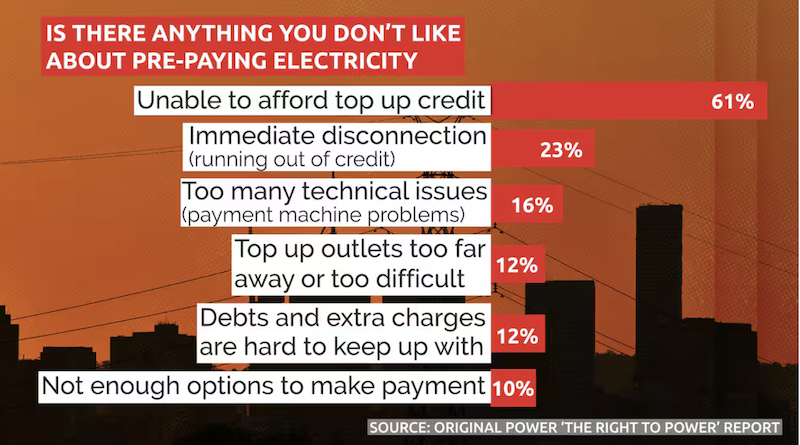 According to the research report, there are around 15,000 First Nations households in Australia that rely on prepaid power. For them, prepaid is not a choice — it's the only option their energy retailer provides.
That means around 65,000 First Nations people live under prepayment systems.
They must prepay for credit — similar to topping up a mobile phone.
When the credit runs out, the power cuts instantly, with no warning, no grace period and no safety net — just a small amount of emergency credit that immediately turns into debt.
On average, these homes experience more than 30 disconnections a year, many of which last hours and sometimes days.
The report estimates there have been 440,000 disconnections across 8,800 households in the past year alone.
Affordability is noted as a pressing concern, with electricity tariffs for prepaid customers ranging from 11 to 34 cents per kilowatt-hour, depending on jurisdiction.
This resulted in average annual household expenditures of about $2,500 in the Northern Territory, $3,400 in Western Australia and $1,800 in South Australia.
The report estimates the total annual cost of keeping prepayment households connected during extreme heat across the Northern Territory, Western Australia and South Australia is around $1.57 million — a figure that represents up to 95% of the National Energy Bill Relief Fund expenditure for the same period.
The findings have prompted calls for retailers to set lower tariffs and for the federal government to extend its energy relief payments, due to stop at the end of this year.
This is an excerpt from an article by Christopher Tan published by SBS