Are you paying too much for your power? This page contains tips to make your energy bill more affordable.
Understanding your energy bill
If your house is on postpay metering (rather than prepaid), you pay for power you use later, when you get your energy bill.
Energy bills can be hard to understand.
Let’s work out what’s in them.
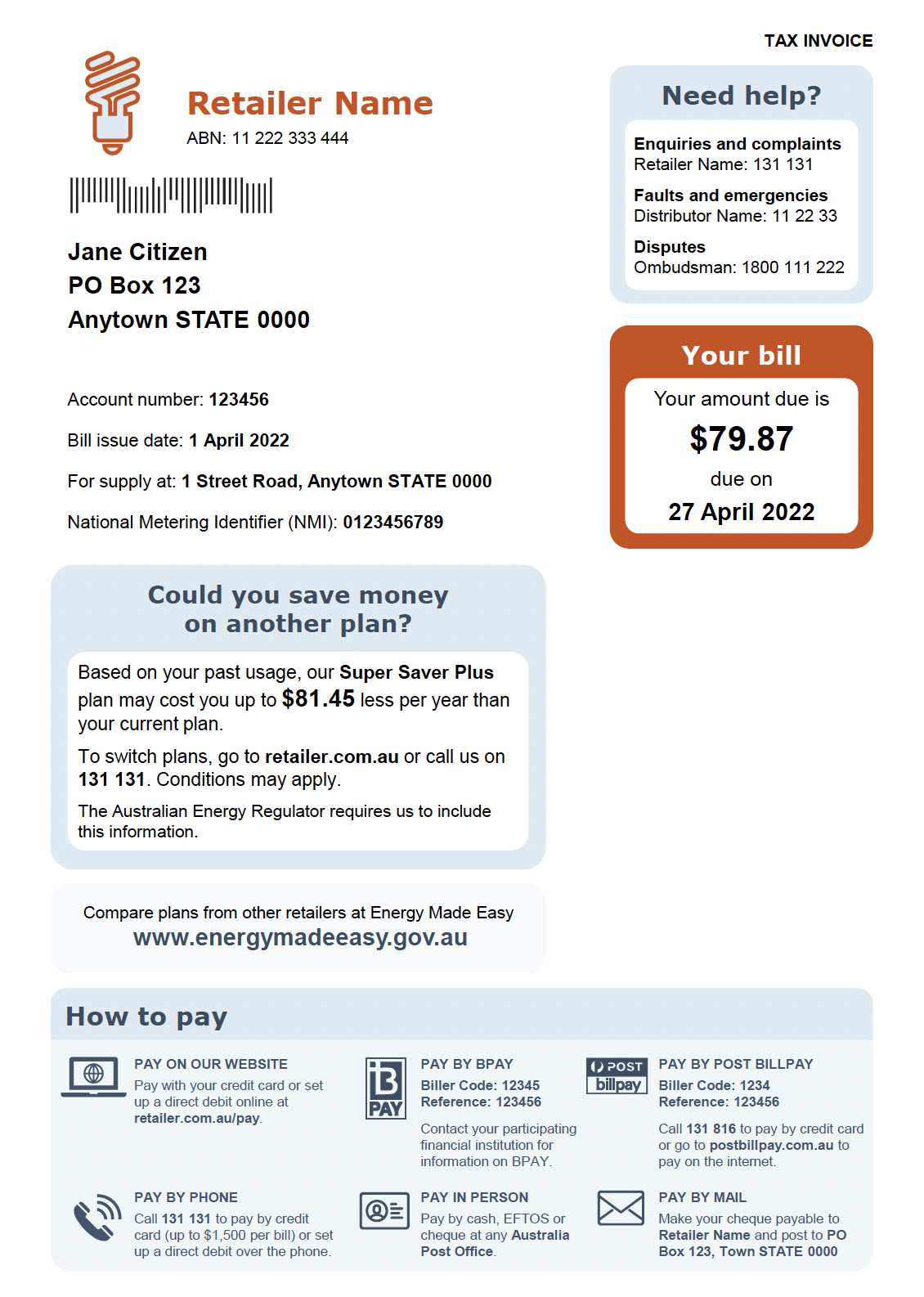
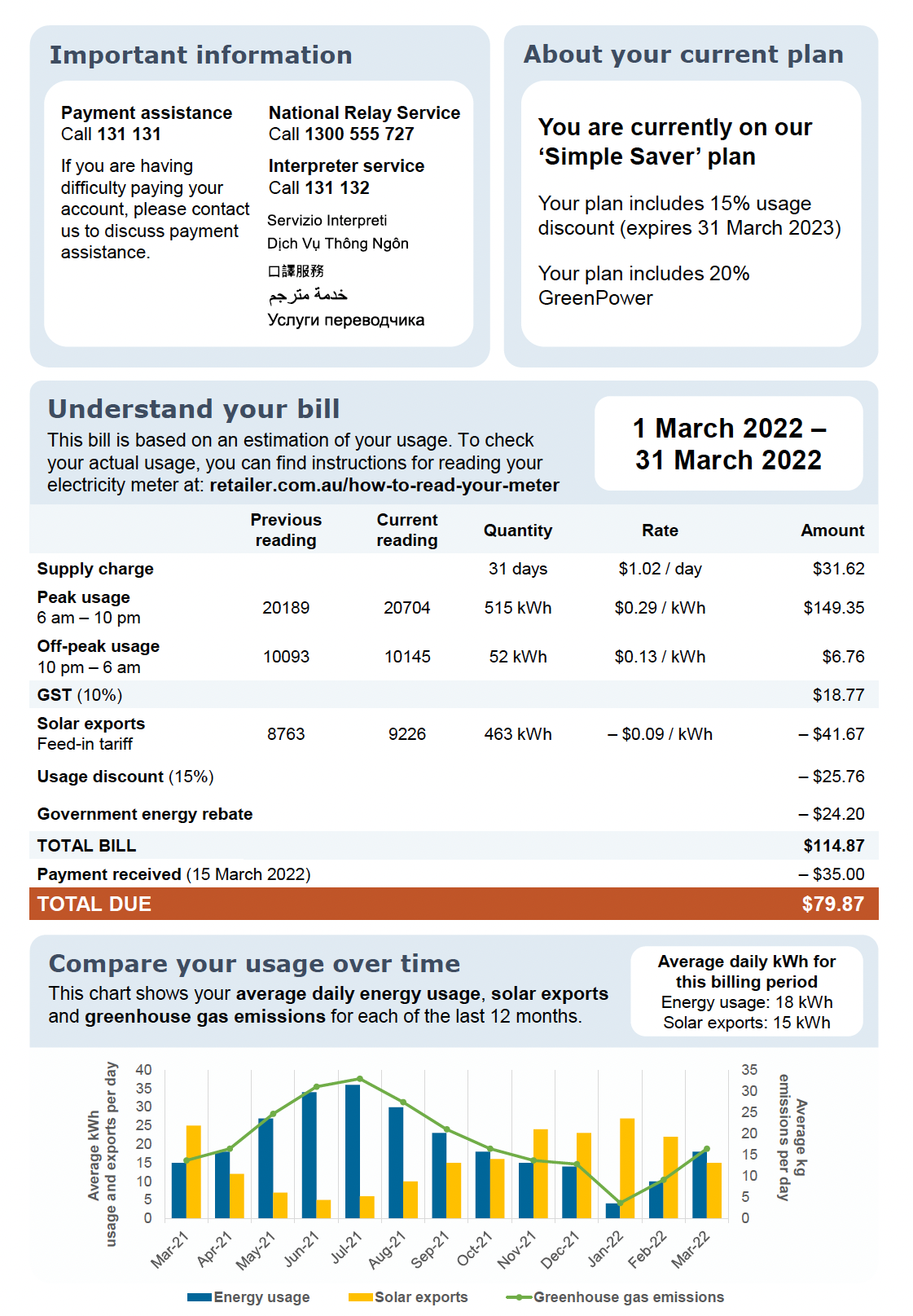
Energy bills often include:
Your account information
- Your name
- Your address
- How much you need to pay and the date you need to pay it by
- Your account number
- The National Metering Identifier (NMI) - most houses and buildings in Australia have one of these - each one is different
- The energy Plan you’re on (organised with your energy company)
Meter information
- The billing period - the days and weeks you used the power you’re being charged for. For example, from October - January.
- Your meter number - the number on your bill should match the number on your meter.
The charges
The total amount you need to pay includes:
- Useage charge:
- How much power you used - this is based on meter readings. It shows the amount of power you used during the billing period (measured in kilowatt hours or kWh, and megajoules or MJ for gas). If your bill is based on an estimate of how much energy you’ve used, this should say so on the bill. The useage charge can change from bill to bill.
- The amount of money the energy company is charging you for each kilowatt hour (kWh) of electricity or megajoule (MJ) of gas that you use.
- Supply charge: this is a fixed charge (same on each bill) for supplying energy to you.
- Other fees or charges: this might be for setting up your account with the energy company, a termination fee if you leave your contract early, or a payment processing fee (for example, if you pay for your energy bill by credit card).
Credits (money back)
- Rebates or concessions - these are generally available to First Nations people on low incomes, on pensions, or with medical conditions.
Want to know more about how to read your energy bill? Click here
Tell me about meters
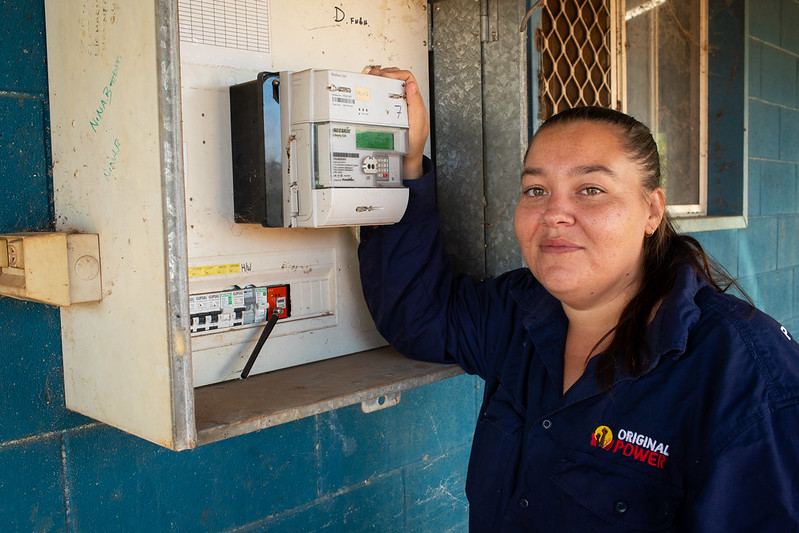
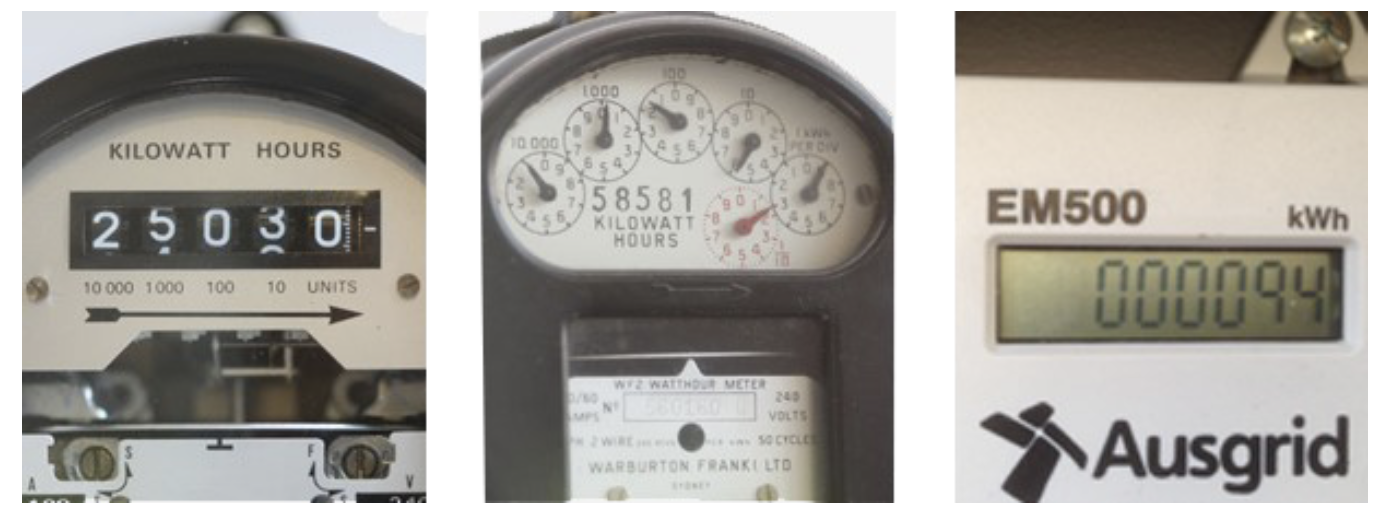
Most houses and buildings have a meter.
Meters measure how much gas or electricity is being used at your address.
Some are called Smart Meters, and they send information back to the energy company about how much energy you have used.
Others need to be read by a Meter Reader - someone from the energy company who comes out and reads the meter at least one time each year, and then tells the energy company what it says. From this reading (and other factors), the energy company can then make an estimate of what you need to pay each bill.
If your energy bill is based on an estimate, you can look at your meter and contact your energy company to tell them the meter reading. If you do this, and it’s different to what they estimated, you will receive a new bill.
What do energy companies offer?
It is best to ring the energy company to find out what they can offer you.
They usually offer you a plan (also called a market offer) or a standing offer.
A plan or market offer is an energy plan advertised by the energy company. Market offers can be more affordable than standard offers, and may have discounts. If it’s available, it is best to go with a plan (a market offer).
When you ring your energy company, choose a plan that best suits you. That plan will usually go for 12 months.
After that 12 months is up, if you don’t do anything, the energy company will put you on a standing offer until you choose a new plan. It is best to ring the energy company at that time and organise a new plan.
Call an energy company to get a better deal
You can negotiate to get the best plan with your energy company.
That means, talking to them to make sure you’re getting the best deal.
Phone them and ask:
- What concessions and rebates can I get? Can I get them backdated?
- What discounts do they offer?
- What is the usage charge? How much do they charge?
- Is it the best plan they have?
If you decide to change energy companies, they may charge you for stopping your energy contract.
Am I paying too much? Find out if you’re getting the best deal on your power costs
There are many energy companies that distribute gas and electricity, in every State and Territory in Australia.
Do you know who your energy provider is? What they’re charging you?
You might be able to get your energy cheaper by going to a different company.
Check if you’re paying too much for your energy
Click on the State or Territory you live in to compare the different plans from energy companies, and choose the best energy plan for you. It might mean changing your energy company.
- ACT
- New South Wales
- Northern Territory
- Queensland
- South Australia
- Tasmania
- Victoria
- Western Australia
What if I can’t pay my bill?
You can get help.
Under law, energy companies must assist you if are having trouble paying your power bill.
The first thing to do is phone your energy company and ask them how they can help. They may have other ways you can pay, like starting a payment plan.
The energy company may also assist to find benefits or rebates for you. Rebates would then be credited to your bill.
You can also apply for a rebate or voucher to help you pay. Click on some available below:
| ACT | |
| New South Wales | |
| Queensland | |
| Northern Territory | |
| South Australia | |
| Tasmania | |
| Victoria |
Energy Assistance Program - Phone 1800 161 215 |
| Western Australia |
Account Establishment Fee Rebate Energy Assistance Payment (EAP) Energy Concession Extension Scheme Hardship Utilities Grant Scheme (HUGS) |
There are other places that may help with emergency payments of your energy bill.
- 13YARN - Phone 13 92 76
- Anglicare - Phone 1300 111 278
- Centrelink Indigenous call centre - Phone 1800 136 380
- Centrepay
- Essential Medical Equipment Payment to keep the house cool and the fridge on
- Mob Strong Debt Help - Phone 1800 808 488
- Natural disaster payment support - Phone 180 22 66
- Salvation Army - Phone 13 72 58
- St Vincent de Paul Society - Phone 13 18 12
What if my energy is cut off?
Disconnections are hard. Food and medicine can spoil quickly, and houses can get too hot or too cold.
If you get an energy disconnection letter, phone your energy company immediately.
Ask them why they disconnected you.
If you or your family have a medical condition, or are on a pension, or are experiencing a loss, tell them.
If it is because you haven’t paid a bill, ask them for a financial hardship plan. Work out an arrangement to pay the bill differently. Ask them for rebates and concessions that will make your bill cheaper. Ask them to send you the agreement in writing.
Ask them to not disconnect you. You can ask them for a letter saying they won’t disconnect you.
Complaints
If you are having trouble sorting your bill with your energy company, contact the Energy Ombudsman.
There’s one in every State and Territory.
The Energy Ombudsman will listen to your troubles and will try and sort it out with the energy company.
The Ombudsman’s help doesn’t cost you anything.
| Australian Capital Territory | ACT Civil and Administrative Tribunal | Phone 02 6207 1740 | |
|---|---|---|---|
| New South Wales | Energy & Water Ombudsman NSW | Phone 1800 246 545 | |
| Queensland | Energy and Water Ombudsman | Phone 1800 662 837 | |
| South Australia | Energy and Water Ombudsman South Australia | Phone 1800 665 565 | |
| Tasmania | Energy Ombudsman Tasmania | Phone 1800 001 170 | |
| Victoria | Energy and Water Ombudsman Victoria | Phone 1800 500 509 | |
| Western Australia | WA Energy and Water Ombudsman | Phone 1800 754 004 |